Wednesday, March 31, 2010

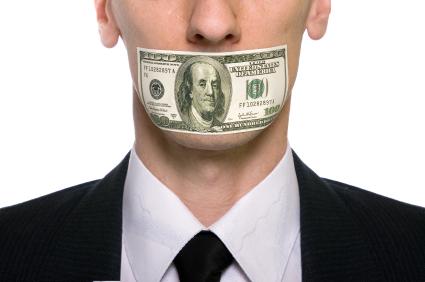
What About the Silent Majority in Housing?


Could it be that current housing prices are not real? Are houses undervalued? Are current prices as artificially low as they were artificially high in 2006?

Something to consider for many market watchers and analysts is that the majority of homeowners are current on their mortgages and fifty percent of home owners have title to their house. These individuals are not participating in the current market. These home owners wouldn't even consider selling at 140% of current appraised values. Most crucially these are the true sellers.

Right now housing prices are determined by transactions between willing buyers and unwilling sellers (i.e. banks, unemployed workers, and forced sellers). This is not a traditional market. It is certainly not an efficient equilibrium- it is a slaughter.

Even with the enormous amounts of inventory coming on line from short-sales and foreclosures, this inventory is a mere fraction of the total houses in existence. So there are seven million foreclosures, so what? That is nothing for a growing population of 330 million strong. The United States needs substantial amounts of additional housing year after year and with home builder's sidelined with prices significantly below their costs to construct, the Country is pure and simply running in a supply deficit in the long run.

For buyers the current situation is an absolute blessing. First time home buyers, investors and people with impeccable timing have gotten a windfall. They are buying an asset for less than its input cost (the materials, land cost and permits to build the house are higher than the sale price). This cannot sustain itself in the long run. Even better for the US economy these home purchases are easily fitting into the purchaser's budget. Seriously, we are talking mortgage payments at 10-15% of the buyer's monthly income. What does that equate to? Disposable income.

Take my friend Dr. C for example. Dr C. paid $550,000 for his home and added $250,000 in cash upgrades and modifications. He also 1031 exchanged an investment into another home at $440,000 as an investment property. Both homes are currently appraised at 50% or less than his basis in these homes. However, if a buyer offered to purchase either of these properties, the offer would not be accepted for anything less than his investment. So what is his home worth? Well, we cannot answer the question because their is no willing buyer or seller to fill the transaction.

The point here is that just as buyers were artificially created by creative financing in 2002-2006 to meet seller's demands, now artificial sellers are catering to buyer's demands. I cannot tell you what the "right" price is, but I can assure you this isn't it. In our Country's more intelligent and logical past, housing prices could be derived either by median income of a given area or as a factor of market rents in an area. In an effort to be concise the reader should see Benjamin Graham and David Dodd's Securities Analysis 1934 to learn these principles. Simply stated, stock prices should be reflective of the earnings of that company in a direct analysis or current bond returns in an alternative analysis- so the same is true of housing prices by the above methods.

If all this is too complicated, simply stated this too shall pass.


Thursday, March 18, 2010

What is the "Market?"


While I don't want to be purely hypothetical, I believe the use of the term "market" as a synonym for commerce creates great misunderstanding in our society. The market is not simply business or the exchange of goods. The market is society, government, and commerce wound into a single concept.

According to Wikepedia the Market (disambiguation) "is an ARRANGEMENT that allows buyers and sellers to exchange things." That's right, an arrangement! Markets are the function of a human agreement to allow the exchange, not the act of exchanging and certainly not the participants themselves (businesses, consumers, traders, brokers, etc.).

Once a population decides that it wishes to develop a market as an economic model, mind that it is a decision not as some would lead us to believe an act of nature, the choice becomes whether the market should be a market economy, a.k.a. free market economy, a mixed market economy or market socialism (like China). While there exists no true free market economy in practice, it is a useful concept to illustrate the ecomomic spectrum that ranges from free market economy to planned economy. So what are the differences? The choice by a population to allow prices to be set by market participants and the choice on how labor is to be allocated.

In its truest sense a free market would allow market participants to set prices and divide labor according to their transactions. A choice to create this type of economy can expeirence periods that are quite harsh and can result in social unrest and inefficiency in prices for extended periods of time. On the complete other side, a planned economy would set prices and labor by decision. Planned economies tend to be very harsh as output levels rarely meet necessary needs of thepopulation and labor tends to become lethargic and atrophied. As a result, the entire world attempts to address the inefficiencies of the free market model, i.e. long periods of price and societal stagnation, without the stagnation and generations without innovation that result from a planned economy.

That said, there are a number of caveats to the free market model. There is Laissez-Faire where there are no laws including property rights enforced by the government. This is the free market model on steroids as most economists believe even a free market consists of government overview with regard to settling, in whole or in part, property, contracts and general access to the market. This form of free market literally places the onus on the buyer and seller to deal with one another without appeal or recourse. This is a no holds barred, steal it if you can, John Locke State of Nature system.

Also, there is capitalism which takes a twist on the free market model and develops a coordinated system of protections that allows capital to flow to other users. Here, its no longer buyers and sellers alone, but capital investors and leverage as societally enforced instruments.

The point of all this is that before there is a market, there is a choice to have a market. The market cannot decide anything. Contrary to popular belief the market is not a decider of prices, capital flows, efficiencies, good business, stock prices, commodities, or anything else for that matter. The market participants acting within the construct of an agreed upon arrangement can decide all of those things. Markets are societal creations to create increased standards of living for its populations. In the end, the market is greater than the prices set by its participants or the efficiencies reached by its functioning.

The market is a population's arrangement to trade goods and services. As such, once cannot separate government from the market or the market from sociological trends. The market is politics, it is family values, it is government regulation, it is capitalism, it is socialism, it is laissez faire, it is communism, it is business, it is consumers, it is buyers, it is sellers, it is competition, it is oligolpoly, it is monopoly, it is those who participate and those who choose to protest it- it is what we as society decide it to be. Why? The market is a choice of the population. Whether or not it exists and to what form it takes has to be chosen. As I have blogged, the market is not an end, but a means to an end- prosperity.

Wednesday, February 3, 2010

China, We May Just Pay You Back!


Empty threats by the Chinese this week in response to United States' demands for the Chinese to cease and desist from their practice of currency manipulation are just that- empty. The Chinese love to threaten that they may stop purchasing United States Treasuries should US policy be less accomodative to their desires. The problem is that Chinese purchases of US debt are not acts of compassion or alturism towards the US, such purchases are the sustaining force of their entire economy.

Without putting US dollars back into the hands of the United States citizens, the Chinese lose their biggest market for selling their goods. Currency manipulation and unfair trade has forced American workers out of work and into debt. Due wage disparities between US workers and their Chinese counterparts, the purchasing power of the United States has been severely reduced. Without taking into consideration unsafe working conditions, no environmental obstacles, a slave-like working class, the Chinese most effectively manage labor costs by not allowing their currency to float, or trade on the free market.

When US citizens purchase a Chinese good, the dollars used are confiscated by the Chinese government and internally exchanged for Yuan. Yuan are not allowed to be taken out of the Country and strictly forbidden from being sold except to the Chinese government. As a result, it is a worthless currency that only has value to the people of China. With this control China can set the Dollar to Yuan exchange at whatever level is most beneficial to China. In other words, the Chinese government gets to stock pile green backs and pay out in paper.

To compound their control, the Chinese government does not allow foreign corporations access to their Country's markets without giving their government an equity stake. This equity stake is mostly to ensure the regulation of Yuan to ensure their competitive advantage in labor costs. It is because of this manipulation that the Chinese love to state that their exchange rates are an "internal" matter.

The rub is that China must get the dollars back into their consumers hands, the United States citizens, because their own citizens are paid in worthless Yuan (very little Yuan at that). This equates to a Chinese popultion sustain adequate demand for goods to sustain their economy. Many sources have said that if the Chinese were to allow their currency to float, the market would prove it is undervalued by up to sixty percent (Peterson Institute of International Economics states the Yuan is undervalued by 30% to currencies in general and 40% against dollar).

Allowing the Yuan to float would solve the "real" domestic demand issue; however, the Chinese luxury of being a net exporter and hoarder of natural resources would be contested as their competitive advantage in undervalued labor would be significantly reduced. Other countries would be able to compete on the global markets and jobs would return to the United States, among other countries. The necessity for the US to float debt that the Chinese must buy would thus be reduced.

Let's get back to the empty part. If the United States really wanted to call China's bluff all that has to be done is to pay them back. That's right, have the Federal Reserve buy three trillion dollars in Treasuries from the US and then cut the Chinese a check. Maybe even a big check, like the type of check one sees at a charity event. One lump sum, paid in full, check! Now I know that the dollar would be devalued into oblivion on the international markets and mayhem would ensue for the exchanges and bankers, but the sun would rise tomorrow. I would bet you 50 percent of Americans wouldn't even notice, not "real" Americans anyway. After all, many Americans think the government just prints money in the first place, so why all this nonsense accounting. Com'mon China, Wake Up! If you don't want our debt but you still want to hoard dollars by devaluing labor, the end result is we can always just pay you back and start over. We have real infrastructure, real natural resources and a capable population- I like our odds.

After all, sometimes the bank owns you, and sometimes you own the bank!

Monday, January 25, 2010

Effective Financial Regulation Means Addressing Agency Issues


The hot button on Wall Street and Washington is the proper regulation of financial markets so that the United States citizens never again have to endure a period as we currently are living within. Many ideas have been circulated regarding which institutions shall govern, capital requirements and transparency. Those concepts aside, no regulation will suffice if the agency issues of securitization and derivatives are not addressed.

Agency Issue of Securitization

Since loan originators in modern days no longer hold, service or maintain their loans, the true test of a loan's worth is how much they can sell it for on the secondary market. Such loans, once regarded by the industry as one of the safest of debt obligations for an investor to purchase (see Hildy Richelson & Stan Richelson, Bonds: The Unbeaten Path to Secure Investment Growth), now have become one of the most dangerous of debt purchases. Why?, you ask.... It's the agency issue.

Agency issues rarely immediately gain steam. There was a time when the lender was invested in the borrowers successful repayment of the debt they had extended because they had to collect it to recoup their investment. The care and attention put into these loan originations made such debt issuances very stable and quite reliable investments. The combination of a proven track record and the general appreciation of real estate values created new demand for debt as an investment. With demand growth additional sellers, or suppliers, entered the market sending origination volumes skyrocketing.

Like most agency issues, the problem begins to occur once capitalism has inflicted a significant amount of competition on an industry. At this point, survival instincts can get the best of some market participants. In this specific case, the focus becomes originate and sell the loan at any cost regardless of ability of the borrower to pay- so long as a rating agency will stamp it and someone will buy it.

The practice of only dealing with the credit worthy is no longer of paramount consideration because the market place is overrun with competition, making risk less of a concern, and profit the bottom line. Since an originator can sell loans on the secondary market "without recourse," or no downside for nonperformance of the borrower, loan originators do not weigh the dangers of extending credit so long as their investment can be sold for a profit. At this point, the loan is often sliced, diced and divided then passed like a hot potato with the final holder being the big loser (often pension funds and institutional investors who relied on the rating issued by the bond company to judge the debt).

The reality is that the second, third, fourth holder of a debt obligation has no chance to truly evaluate the issuance. The originator is the most capable entity to judge whether or not a borrower will pay. Here is an example:

Joe wants to buy a house and he has a credit score of 700 and a job in construction. When the originator calls to verify employment they are told that Joe is an independent contractor and they use him for about 60 hours a week because of the demand. Joe makes $7,000/month. Now the originator understands that Joe is working way above his capacity for the long term and that the $7,000/ month is probably not sustainable. Nonetheless, Joe looks great on paper, even with two years tax returns. He budgets even though he has a trailer payment, two quad payments and two leased cars.

If the originator knew they had to collect this debt, the loan wouldn't be made. However, the originator can send the loan packet to the rating agency and sell it before the ink dries. Here's the best news for the originator, when Joe works a year at 30 hours a week and makes half the income, they aren't responsible for a dime of the loaned principle. The hazard thus lands with whomever holds the loan when the music stops.

Serious reform, means serious regulation on how much responsibility a loan originator must hold on its own paper. Also, much like the Glass-Steagall Act, the Country must not deviate from this simply because times improve.

Agency Issue of Derivatives

This one is simple- it is bad policy for a disinterested party to buy insurance on someone else's demise. How would you as the reader feel if I was buying short term life insurance on your life? While I understand why someone would want to buy these products, and moreover why people love to sell these "instruments of mass destruction" (Warren Buffet on CNBC, 2007), profit, I don't understand why as a society we believe that this behavior is worth the risks? I, personally, would rather see these firms cheer against little league players or bet the "don't come line" in Vegas than wager and actively participate in the destruction of our system for profit.

Great economies and great societies thrive when a profit leads to greater money flows and greater profits leading to gentle and sustainable inflation of prices. Zero sum game markets such as derivatives pit market participants against one another in an unnatural way- the equivalent of every dollar made is lost somewhere else. In other words, their is not the exchange of goods for currency based on differences in subjective valuations of the parties ( A is a willing seller of a widget for x, and B is a willing buyer of a widget at x), but rather a dollar made is a dollar lost. Derivatives are even different from traditional insurance where the buyer gives currency in exchange for a risk to him or herself, hence the traditional trade off where the seller needs additional capital and the buyer needs less risk.

The liquidity and hedging benefits are far less important to the market as a whole than the costs of having to pay off these bets when the market is least able to bear the cost to do so.

Without addressing the agency issues of these two products the market is not safe from another collapse. Effective reform must make market participants accountable for the sustenance of the markets in general; as well as, their own actions.

Saturday, December 19, 2009

The Environmental Bubble


Many Americans are wondering if this Country could possibly create another bubble. Well, we are currently in the process, the environmental bubble.

First, let us be painstakingly clear, bubbles are concentrated inflationary pressures on a single good, service, or industry which far exceeds general price appreciation accessible to the population in their aggregate income levels. In other words, prices in such a good, service or industry accelerate beyond what the population can reasonably pay for.

So what causes bubbles? Usually it is artificial causes such as government action, a media consensus that manipulates public opinion, or anti-competitive corporate behavior (such as cartels or monopolistic behavior). Occasionally, but not often, bubbles are caused by more natural market forces such as scarcity, insatiable demand or necessity. Regardless of its inception, once such a bubble exceeds that good, service or industry's marginal utility, people substitute, innovate or walk away. The destruction thereby is caused because the population almost always fails to collectively quit allocating resources to the bubble at the proper price level. We just continue to do business above the long run price equilibrium.

Let' talk about sliced bread, which seems to be by modern nomenclature the "Greatest Thing Ever!" Let's say sliced bread came out at a price of 5 cents a loaf. After a while, the government decided to subsidize it due to the safety and massive decreases in finger wounds encountered by the public. Then, aside from the subsidy, the public went rave for sliced bread because of its convenience. One could hardly find it, and if they did, they would buy as many loaves as possible do to the high resale of it on the black market. The producers of sliced bread decided to raise the price to 10 cents, then 15 cents, then 25 cents. Before long, the price sliced bread manufacturers could charge was over a dollar.

Watching the profits roll in, new competitors decided they could make a huge profit at a dollar a loaf. In fact, producers who didn't even know how to make bread could even do it. The market becomes flooded by products. Even though supply is now excessive, and the price is over $1.25, people are buying it like hot cakes, the previous "classic." The price hits $1.50, and the production is three times the populations demand. Sliced bread is so expensive, it represents over 50% of the buying public's "pre-sliced bread budget" for meals. That said, the business community sees no end in sight. IPOs start popping up for start ups that are going to improve the product even more. There are high end producers with wafer thin slices, and volume producers with thick slices. $1.75 the median price goes.

All of a sudden, bread is so plentiful it starts going bad on the shelves. Next, Croissants become the craze after "Breakfast at Tiffany's" debuts. The crowded producers start price cutting. Late comers and the less efficient producers go out of business as the price falls to $1 a loaf (oh yes it always falls faster). Then, people realize what they used to spend on bread and lower their consumption, more companies go out of business. At 45 cents a loaf, banks are going out of business because of their exposure to retailers and producers of sliced bread who have shuttered their doors. Further, the equipment and fixtures that were security for the loans are worthless since no one wants to get into the "sliced bread biz". Now it becomes impossible for any sliced bread company to obtain credit and the price falls further. Now at 10 cents a loaf, sliced bread is below the median budget for bread prior to the craze. Someday prices will increase and sliced bread will find equilibrium, but for now it is a battered industry with many victims, both direct and collateral to the industry, out of work and devastated.

The business of the "environment" has all the catalysts to bubble and all the inefficiencies to explode. To make matters worse it is a forced market. "Environmentally friendly" is often more expensive to purchase and a less efficient use of capital to utilize (i.e. buying solar panels and saving on electricity or paying your electric bills and using the same money to buy the S&P 500). If we have budgeted x for energy costs, and to be environmentally conscious the price is x+e, or a premium, we have a classic recipe for a bubble. The most dangerous part of the environmental market is that it is an extra cost without an increase in an individual's standard of living. There is no egotistic demand to be environmentally conscious. There is merely a premium to pay. Further, since environmental equipment, suppliers and producers do not generate natural demand or cost savings to consumers, they start under the auspices of not being competitive and superfluous.

Regardless of the economic theory that polluters do not realize their total costs to society and thus should be responsible for down stream costs- those costs are not tangible in the traditional sense and such a theory likely to fall from favor. The best the environmental entrepreneur can hope for is that innovation results in competitive prices in comparison to their less environmentally sound competitors.

Tuesday, November 24, 2009

The Often Ignored Collectivism of Capitalism


Many have come to appreciate the very simple realities shared by this blog when one abandons ideology, partisanship and prejudice and logically attacks the issues of today. Partisans and one way thinkers are silly. We all appreciate that fact more when we concentrate without influence on a topic with good old fashioned common sense.

Here are a few simple realities many can't argue with nor agree upon:

1. Socialized Medicine. We already have socialized medicine. The insured pay the bills of the uninsured and under insured. Twenty-five dollar aspirin and rising deductibles, premiums and co-pays are the result of free medical procedures performed by hospitals on the indigent, under insured and uninsured. Our disagreement and inability to manage this reality causes tremendous inefficiency.

2. Mark to Market Accounting. There is no such thing as "mark to market." There is mark to transaction price accounting, but transaction prices aren't always correct. In the short run, transaction prices can run higher and lower than what a reasonable person would buy or sell for. The fallacy resides in the fact that it doesn't count those who refuse to come to the market at a said price, the silent majority. When prices are too high many buyers refuse to do business. When prices are too low many sellers avoid coming to the market. Mark to market only measures what those who are willing to do business under very specific conditions, sometimes unwillingly, are transacting at. As price points shift, often there are very different buyers and sellers who come to market. In other words, if one sale is made at x, and no other sales are made, the price would be x, even if ten thousand transactions would have occurred if the price was y. In the long run, values are functions of aggregate incomes and demands of society, not prices.

3. The back story to the stock market. There is no back story or information that is causal to stock prices. In any given day the only invariable truth is that there were more buyers than sellers or more sellers than buyers. The only reason financial news bears any relationship to stock price fluctuations is that the buyers and sellers believe that such stories are related. This results in a massive and naively trusting game of signaling. So long as, the majority of positions all "agree" to weight the news equally, short term fluctuations can be reasonably explained. That said, it's not the news - it's the agreed upon norm of how to act on such news that moves the price. In the end, its the buying and selling that moves price.

4. The market is always right. The market is nearly never right. Over long, LONG, periods of time, the averages of the market tend to support logical results. On any given day, the market is as wrong as any individual. It could be argued the market is further from truth than any free thinking individual in the tendencies of market participants to stampede in and out of positions moving equilibriums past proper price levels at neck breaking speed. If the real value is five and the market spends ten years at 2 and the subsequent 10 years at 8, than on average it was right even if it never maintained that value.

Of course we could go on and on, but it is important to land the plane on the point of this obvious exercise in logic. Regardless of which issue we speak of, the solution to inefficiency, breakdowns, inequity, fallacy, losses and failures is the point of agreement in society. All of our actions impact our fellow countrymen and women. When we agree, momentum is created, whether it be positive or negative. A point of agreement is anything from a sale to an appraisal. The willingness to stay in an upside down mortgage to ensuring all have access to affordable health care. A decision to place a put or call option on natural resources one doesn't require to thinking for oneself. We are our brothers keeper whether we believe that or not. Our failure to properly conduct ourselves in a positive manner shall manifest itself in the our reality.

Energy prices, home values, loan qualifications, joblessness, health care costs, profits and losses are our decisions collectively. They are the fruit of our actions. It is collectivism, or a positive point of agreement, that creates abundance. Our world is a manifestation of our collective perspective. Gold is not edible, usable or valuable in its own right, only by collective recognition and agreement of its value does it become an inflation hedge or an international currency. Whether collection of our individual efforts results in disruption, decay and depression or prosperity, innovation and hope is all decided by the direction of us as a mass. The apex is thus the superseding values of our population to act in self interest without detracting from the progress of society as a whole and influencing our families, neighbors, friends and coworkers to abide as well.

Thursday, October 22, 2009

When Did The Tie That Bind Us Break?


Often I wonder if the United States will be able to recover as the super power it once was. I wonder, Could we win World War II again? Could we withstand the odds of the Revolutionary War? Could we handle an oil embargo or an era of expansion like the Manifest Destiny under President Polk?

Such instances require unanimity and collectivism. We would have to rediscover what it meant to sacrifice for one another and to believe in each other as Americans. After 9-11, we underwent terrorism by our own citizens such as anthrax and the sniper killer. After the financial collapse of 2008, we cannot find enough unanimity to stop stealing from one another (ponzi schemes, corporate raiding, rampant voluntary foreclosures, ruthless lending tightening by banks (government bailed out banks mind you) and energy price speculating.) It seems for every challenge Americans scurry and mutilate one another.

Instead of becoming a nation of one, we polarize. Republicans side with Republicans and oppose anything Democrats suggest, and Democrats side with Democrats and oppose anything Republicans suggest. Regions divide and engage much like rival gangs. Age groups and ideologies harden in their positions.

While our Founders envisioned ideological debate, they could never have imagined such devastating polarization where either side would prefer the Country crumble than lose their position. It is a sad time in our history. Partisans justify even the most nonsensical notions to attempt to satisfy their own greed and self interest. I doubt the Americans of today would have starved in the snow at Valley Forge or had the resolve to take Iwo Jima. More likely the Americans of today would have quibbled, robbed the wounded and stolen the identities of the dead corpses.

Balancing the trade deficit, building a vibrant middle class, maintaining an overwhelming strength on the world forum in voice and respect, and fostering a nurturing Nation of peaceful compassion for our citizens are simple unalienable truths. Yet we cannot agree on these issues. Why is that? I'm not talking nuance, I am talking about things that should be so ingrained in the decency and fabric of Americans, that to resist them would be unnatural. The solution to our woes be it deficits, deflation, inflation, negative GDP growth or international threats is in recognizing what it is that ties us as one and working in unison for the betterment of the Country as whole wihtout regard for demographic, party affiliation or self.